Chimpanzee Trekking Uganda 2026: Costs, Kibale, Best Time, Packing & Expert Tips
21/08/2026
Ultimate Rwanda Gorilla Trekking Guide: 2026 Costs, Permits, Best Time, Difficulty & Itinerary
26/08/2026
Gorilla Trekking vs Chimpanzee Trekking: Which Uganda Experience Is Right for You?
Imagine standing in a misty Ugandan rainforest, hearing movement above your head. A few seconds later, a chimpanzee swings through the canopy and disappears into the leaves. Now imagine a completely different scene: a huge silverback sitting quietly in the forest while a gorilla family feeds nearby.
That difference is exactly why gorilla trekking vs chimpanzee trekking is not a simple question of which animal is “better.”
Both experiences are extraordinary, but they feel completely different. Gorilla trekking is slower, more intimate and usually more physically demanding. Chimpanzee trekking is faster, louder and often more unpredictable. Your budget, fitness, photography interests and available travel time can all change which experience makes more sense.
This guide breaks down gorilla trekking vs chimpanzee trekking in Uganda for 2026, including cost, locations, difficulty, time, wildlife behaviour, photography and the type of traveller each activity suits best.
If you have enough time and budget, there is an even better answer: do both.
Quick Facts: Gorilla vs Chimp Trekking at a Glance
| Feature | Gorilla Trekking | Chimpanzee Trekking |
|---|---|---|
| Main location | Bwindi & Mgahinga | Kibale & selected other forests |
| Experience style | Slow, intimate encounter | Active, energetic tracking |
| Typical trek | 2–7 hours | Usually shorter, depending on sightings |
| Normal viewing | Up to 1 hour | Up to 1 hour |
| Difficulty | Moderate to strenuous | Generally easier |
| Cost | Significantly higher | More budget-friendly |
| Best for | Bucket-list wildlife | Primates, photography & active travellers |
| Minimum age | 15 | 12 |
| Photography | Excellent portraits | Excellent action shots |
| Best combination | Safari + gorillas | Forest + gorillas + safari |
UWA states that gorilla trekking takes place in Bwindi Impenetrable National Park and Mgahinga Gorilla National Park, with treks potentially lasting 2–7 hours and one hour of observation with habituated gorillas. Chimpanzee tracking is also regulated, with designated tracking locations and controlled viewing periods.

Gorilla Trekking vs Chimpanzee Trekking: The Experience
The biggest mistake travellers make is treating these activities as interchangeable.
They are not.
Gorilla trekking vs chimpanzee trekking delivers two completely different wildlife experiences. Mountain gorillas are generally observed on the forest floor, where their size, facial expressions and family interactions can be remarkably easy to appreciate.
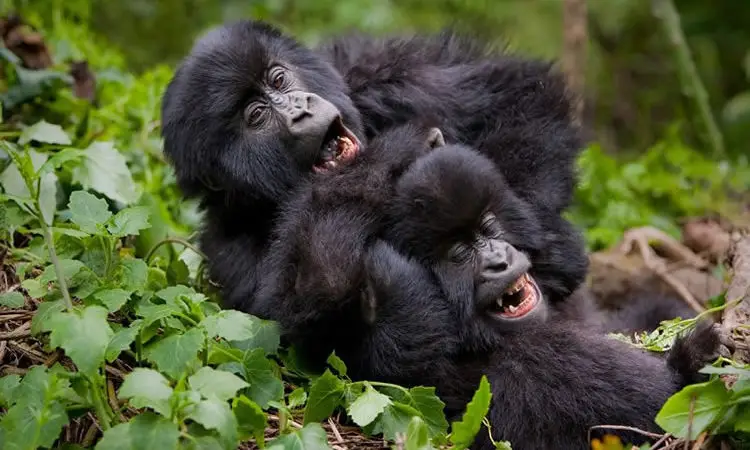
A typical encounter may involve watching a silverback resting while younger gorillas climb, play or move around the family. The atmosphere can be surprisingly quiet.
Chimpanzees create a different kind of excitement. They are highly social, vocal and agile. You may hear pant-hoots, branches moving or calls echoing through the forest before actually seeing the animals.
That makes gorilla vs chimp trekking a question of personality.
Do you want a powerful, intimate encounter where you can sit and observe? Gorillas may win.
Do you prefer movement, sound, climbing and unpredictable action? Chimpanzees may be your better choice.
Gorilla Trekking Uganda
Gorilla trekking Uganda focuses on habituated mountain gorilla families in Bwindi and Mgahinga. Bwindi is divided into major trekking sectors including Buhoma, Ruhija, Rushaga and Nkuringo, giving travellers several possible starting areas.
Chimpanzee Trekking Uganda
Chimpanzee trekking Uganda is especially associated with Kibale National Park, often called Uganda’s primate capital. UWA also identifies chimpanzee tracking opportunities in the Queen Elizabeth Conservation Area, including Kyambura.

Gorilla Trekking vs Chimpanzee Trekking: Cost Comparison
For many travellers, money is where the decision becomes obvious.
Gorilla trekking vs chimpanzee trekking has a substantial price difference because gorilla tourism is a highly regulated conservation experience with limited permits.
The published UWA 2024–2026 tariff lists gorilla tracking at USD 800 for foreign non-residents and USD 700 for foreign residents, while the same tariff lists Kibale chimpanzee tracking at USD 200 for foreign non-residents and USD 150 for foreign residents. UWA’s rates page also indicates that a new 2026–2027 tariff update is being issued, so travellers should confirm the applicable rate when booking.
In practical terms, gorilla trekking requires a much larger activity budget.
| Cost Factor | Gorilla Trekking | Chimpanzee Trekking |
| Activity permit | Higher | Lower |
| Accommodation | Varies | Varies |
| Transport | Often significant | Often easier to combine |
| Porter | Highly recommended | Optional |
| Total safari cost | Higher | Lower |
| Budget flexibility | Lower | Higher |
The permit is only one part of the total safari price. Transport, accommodation, meals, park activities and the number of safari days can dramatically affect your final budget.
This is where gorilla vs chimp trekking becomes more than a permit-price comparison.
A traveller with four days and a moderate budget may get better value from chimpanzee trekking combined with Kibale forest experiences. A traveller with a once-in-a-lifetime wildlife budget may decide that the gorilla encounter deserves priority.
Which Is Harder: Gorilla Trekking or Chimpanzee Trekking?
If physical effort is your concern, gorilla trekking vs chimpanzee trekking usually favours chimpanzee trekking.
UWA describes gorilla trekking as requiring moderate fitness, with the activity potentially lasting between 2 and 7 hours. Terrain can include steep forest slopes, slippery paths, roots, mud and thick vegetation.
Chimpanzee trekking can still be physically demanding, but Kibale’s forest trails are generally less intimidating than some gorilla trekking sectors.
That does not mean chimp trekking is effortless.
Chimpanzees move. You may walk quickly, stop, listen, change direction and continue following the trackers. The challenge is sometimes less about climbing and more about staying alert.
If Your Fitness Is Limited
Tell your safari operator before booking.
Do not simply assume that “shorter” means “easy.” Weather, forest conditions, animal movements and your chosen trekking sector can change the experience.
For gorilla trekking, hiring a porter is one of the smartest decisions you can make. You are not paying someone merely to carry a bag. A good porter can assist on steep or muddy sections and make the overall experience considerably more manageable.
Wildlife Behaviour: Calm Gorillas vs Energetic Chimps
This is where gorilla trekking vs chimpanzee trekking becomes fascinating.
Mountain gorillas often provide relatively stable viewing opportunities once the family has been located. You can watch feeding, grooming, resting, movement and interactions between adults and youngsters.
Chimpanzees are different.
They can move through the forest quickly and may spend considerable time in the canopy. Their social behaviour is complex, and their vocal communication can turn a quiet forest into an explosion of sound.
UWA’s current conservation reporting highlights ongoing research into chimpanzee social behaviour in Kibale, including long-term research at Ngogo. Uganda’s 2026 wildlife report estimates approximately 6,075 chimpanzees nationally based on recent surveys, showing the importance of Uganda’s forests for chimpanzee conservation.
That makes chimpanzee trekking Uganda particularly rewarding for travellers who want to understand primates rather than simply photograph them.

Photography: Which Primate Trek Is Better?
There is no universal winner in the gorilla trekking vs chimpanzee trekking photography debate.
Gorillas are often easier to photograph because they can remain relatively still. Their large faces, expressive eyes and family interactions create powerful portrait opportunities.
Chimpanzees can produce more dynamic photographs.
A chimp may be sitting on the ground one moment and climbing into the canopy the next. That unpredictability can create fantastic action images, but it also makes photography harder.
Gorilla Photography Tips
Use a camera setup that performs well in low light. Bwindi’s forest can be dark even during daytime.
Avoid flash photography and respect ranger instructions.
Chimpanzee Photography Tips
Carry enough battery power and memory cards. Keep your camera ready because sightings can happen quickly.
A telephoto lens is particularly useful when chimpanzees are high in the canopy.
If photography is your main goal, tell your guide. They can often help you understand where to position yourself without disturbing the animals.
Time With the Animals: An Important Difference
One misconception about gorilla trekking vs chimpanzee trekking is that chimpanzee trekking gives visitors unlimited time with the animals.
It does not.
UWA’s current management guidelines specify a maximum of one hour of viewing for normal gorilla and chimpanzee tracking. Habituation experiences can allow up to four hours.
The important distinction is therefore not simply how long you spend looking at the animals.
It is how you spend the time before the encounter.
With gorillas, the hike itself can be part of the adventure. You are moving through dense rainforest while trackers search for the family.
With chimpanzees, locating the animals can feel more active because their movement and calls help shape the tracking experience.
For travellers who love the search as much as the sighting, both are excellent.
Gorilla Trekking vs Chimpanzee Trekking: Which Is Better for Families?
Families need to pay close attention to age restrictions.
UWA’s published rules set the minimum age for gorilla tracking at 15 and chimpanzee tracking at 12.
That makes chimpanzee trekking potentially easier to include in family itineraries with younger teenagers.
However, age is not the only consideration.
Parents should think about walking ability, attention span, weather tolerance and how comfortable children are in a forest environment.
For families with older teenagers, doing both can be an excellent primate-focused adventure.
For younger children, other Uganda safari experiences may be more suitable, including game drives, boat cruises and nature activities.
The Best Uganda Itinerary: Do Both
If your schedule allows it, the smartest answer to gorilla trekking vs chimpanzee trekking is not choosing one.
Do both.
A classic Uganda primate itinerary can begin around Kibale National Park for chimpanzee trekking, continue through Queen Elizabeth National Park for a traditional wildlife safari, and finish around Bwindi for gorilla trekking.
This route gives you three completely different experiences.
Kibale: chimpanzees and rainforest primates.
Queen Elizabeth: elephants, buffalo, hippos, lions and classic savannah scenery.
Bwindi: mountain gorillas and spectacular highland rainforest.
The result is much richer than building an entire Uganda holiday around one animal.
Bigodi Africa Expeditions can also structure the route around your available days and budget rather than forcing you into a standard itinerary.
Practical Tips for Gorilla vs Chimp Trekking
Book Permits Early
Do not wait until you arrive in Uganda.
Gorilla permits are limited, and your preferred trekking sector and date may not remain available.
Carry Waterproof Gear
Uganda’s forests can be wet even when the weather looks fine at breakfast.
A waterproof jacket, backpack cover and protection for camera equipment are essential.
Wear Proper Hiking Shoes
Forget fashionable safari shoes.
You need footwear with good grip, especially for muddy forest trails.
Hire a Porter
For gorilla trekking, this is one of my strongest recommendations.
It reduces physical strain and provides direct economic support to local communities around the trekking areas.
Follow Distance Rules
Never attempt to touch, feed or approach wildlife.
UWA’s rules exist to protect both visitors and animals, including disease-control measures because humans and great apes can transmit illnesses to one another.

Frequently Asked Questions
Is gorilla trekking better than chimpanzee trekking?
Not automatically. Gorilla trekking is usually the better choice for travellers seeking a rare, intimate and emotionally powerful encounter. Chimpanzee trekking is better for travellers who prefer energetic wildlife, forest movement and a lower activity cost. Your budget, fitness and interests should determine the decision.
Is chimpanzee trekking cheaper than gorilla trekking in Uganda?
Yes, generally by a large margin. Published UWA tariffs have historically placed chimpanzee tracking well below gorilla tracking, although current rates should be confirmed when your 2026 trip is booked. The wider safari cost also depends on accommodation, transportation and itinerary length.
Where is the best place for chimpanzee trekking Uganda?
Kibale National Park is the country’s best-known destination for chimpanzee trekking and is particularly famous for its primate diversity. UWA also identifies chimpanzee tracking in Queen Elizabeth Conservation Area, including Kyambura Gorge.
How difficult is gorilla trekking Uganda?
Gorilla trekking requires moderate fitness and can last approximately 2–7 hours depending on the location and movement of the gorilla family. Some routes involve steep, muddy and uneven terrain, so preparation matters.
Can I do gorilla and chimpanzee trekking on one trip?
Absolutely. In fact, combining them is one of the best ways to experience Uganda’s primate diversity. Kibale and Bwindi can be connected through a longer safari itinerary, often with Queen Elizabeth National Park added between them for classic wildlife viewing.
What should I choose if I only have one day?
If your trip genuinely allows only one primate activity, choose based on your priority. Choose gorillas if they are a lifelong bucket-list dream. Choose chimpanzees if you want a less expensive primate experience and more flexibility within a shorter Uganda itinerary.
Final Verdict: Gorilla or Chimpanzee Trekking?
The gorilla trekking vs chimpanzee trekking decision ultimately comes down to the kind of wildlife encounter you want.
Choose gorillas if you want a once-in-a-lifetime experience, dramatic close-range encounters, powerful family interactions and you are prepared for a more demanding trek and higher permit cost.
Choose chimpanzees if you want energetic behaviour, vocal communication, forest adventure and a more budget-friendly primate experience.
But if your budget and schedule allow it, do not force yourself to choose.
Combine chimpanzee trekking in Kibale with a classic wildlife safari and finish with gorilla trekking in Bwindi or Mgahinga. That gives you a far more complete picture of Uganda’s extraordinary wildlife.
When planning gorilla trekking vs chimpanzee trekking, the right itinerary matters just as much as the animal you choose. Bigodi Africa Expeditions can help you build the route around your budget, fitness, travel dates and wildlife priorities. Book your dream safari and start planning today — Uganda’s forests are waiting for you.