Best Kenya Safari Packages 2026: Prices, Itineraries, Seasons & How to Choose
04/09/2026
Kenya vs Tanzania Safari: Which Country Is Better for Your 2026 Trip?
09/09/2026
Serengeti National Park: Your Honest Guide to Africa’s Wild Heart
The first thing that surprises many visitors about Serengeti National Park is not the lions, wildebeest or endless grassland. It is the sheer size of the place. You can spend hours driving through open country and still feel as if you have barely scratched the surface.
That scale is exactly why planning matters.
A good Serengeti safari is not simply about arriving in Tanzania, checking into a lodge and hoping wildlife appears. Your travel dates, chosen region, number of nights, accommodation style and route can dramatically change what you see and what you pay.
This 2026 guide breaks down the practical side of Serengeti National Park without the usual fluff. You will learn when to visit, which regions are best, what wildlife to expect, how much a trip can cost, how many days you need and which mistakes can quietly ruin an otherwise expensive safari.
If you want spectacular wildlife without wasting time or money, start here.
Serengeti National Park at a Glance
Location: Northern Tanzania
Size: About 14,763 km²
Best overall approach: Choose the region according to your travel dates
Classic wildlife: Lion, leopard, cheetah, elephant, buffalo and black rhino
Migration: More than one million wildebeest move through the wider ecosystem annually
Ideal first visit: About 4 to 5 nights
Main safari activity: Guided game drives
Major gateway: Arusha or Kilimanjaro International Airport
Key areas: Central, Northern, Southern and Western Serengeti
Best known event: Great Wildebeest Migration
The Serengeti ecosystem is larger than the national park itself, stretching across Tanzania and connecting ecologically with Kenya’s Masai Mara. The park covers nearly 15,000 square kilometres, which explains why a short visit can leave major areas unexplored.
One of the biggest mistakes is treating the Serengeti as one uniform destination. It is not. Central Serengeti offers reliable year-round wildlife, while the north becomes especially important during the Mara River crossing season. The south is crucial during calving, and the west can offer a different migration experience.
That distinction should shape your Tanzania safari from the beginning.
When Is the Best Time to Visit Serengeti National Park?
There is no single perfect month for Serengeti National Park because the best period depends on what you want to see.
If your priority is classic dry-season wildlife viewing, June through October is an excellent window. Vegetation is generally thinner, roads are easier to navigate and animals can become easier to locate around water sources.
If the Great Wildebeest Migration is your priority, however, the answer becomes more complicated.
January to March: Calving Season
The southern Serengeti and nearby Ndutu plains become major wildlife hotspots during the calving season. Thousands of young wildebeest are born, attracting predators including lions, cheetahs and hyenas.
This is an exceptional period for photographers because predator-prey interactions can be intense.
June to July: Western Movement
As the herds move north and west, the Western Corridor can become an important area. The Grumeti region is particularly interesting for travellers who want migration action but prefer something different from the famous northern crossing areas.
July to October: Northern Serengeti
This is the period most people associate with dramatic river crossings. Herds move toward and through the northern Serengeti, where the Mara River becomes a major obstacle.
But here is the honest part: river crossings cannot be scheduled like a theatre show. You can spend several days in the correct region and still miss the exact crossing. Wildlife follows weather, water, grass and instinct, not your itinerary.
November to December: Green Season
Short rains transform the landscape. Birdlife can be excellent, the scenery becomes lush and visitor numbers may be lower in some areas.
For travellers who value photography, landscapes and quieter game drives more than guaranteed migration drama, this period can be surprisingly rewarding.

Which Region of Serengeti National Park Should You Visit?
Choosing the right region is arguably more important than choosing a trendy travel month.
Central Serengeti and Seronera
Seronera is the safest choice for a first-time Serengeti safari when your itinerary does not revolve around a specific migration event.
The permanent water sources and varied habitats support resident wildlife throughout the year. Lions are common, leopards can be found around riverine vegetation and cheetahs use the open plains for hunting.
If you only have three nights, staying central can make logistical sense.
Northern Serengeti
The north is the place to consider when your dates align with the migration’s northern movement.
Kogatende and the Mara River area can provide unforgettable wildlife encounters. The landscape is also quieter and more rugged than some central areas.
However, northern access can add driving time or require a domestic flight. That extra cost can be worthwhile if the migration is your main goal.
Southern Serengeti
The south is particularly valuable during the calving season.
Short grass plains provide excellent visibility, and the abundance of young animals creates opportunities to see predators hunting. If your trip falls around January to March, do not automatically choose Central Serengeti just because it is the most famous area.
Western Corridor
The Western Corridor is often overlooked by first-time visitors. That is precisely what makes it interesting.
During the appropriate migration period, the area around the Grumeti River can provide dramatic wildlife encounters with fewer visitors than some headline locations.

What Wildlife Can You See on a Serengeti Safari?
The Serengeti wildlife experience is much bigger than the Great Migration.
Yes, the moving herds are spectacular. But the permanent resident predators are one of the strongest reasons to visit outside migration season.
Lions
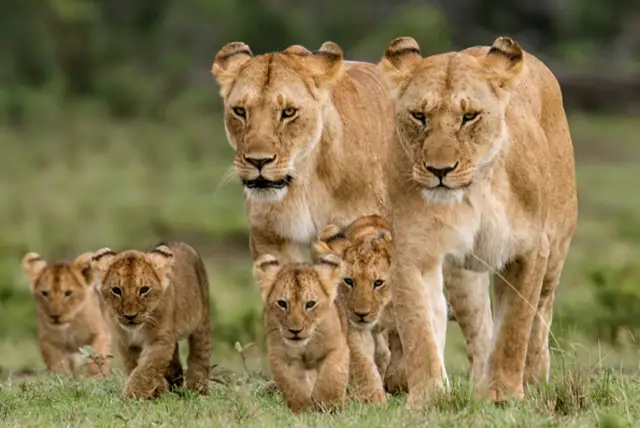
Lions are among the Serengeti’s most reliable big-cat sightings. They use open grassland, rocky kopjes and river areas depending on conditions.
Early morning and late afternoon drives are especially productive because temperatures are cooler and predators are more active.
Leopards
Leopards require more patience.
They often rest in trees or dense vegetation, and spotting one can depend heavily on the experience of your guide. A skilled driver-guide knows where to slow down, which trees deserve inspection and how to read alarm calls from other animals.
Cheetahs
Cheetahs favour open terrain where they can use speed. Southern plains can be particularly productive during calving season because large numbers of young prey create hunting opportunities.
Elephants and Buffalo
Elephants can appear across different parts of the park, while buffalo often gather in substantial herds. They may not have the glamour of a river crossing, but watching a large buffalo herd move through the grassland is part of the Serengeti experience.
Rhino
Black rhino are present but far less predictable than lions or buffalo. A safari operator should never promise a rhino sighting.
The same principle applies to every species: a responsible guide promises the best possible strategy, not guaranteed wildlife.
How Much Does a Serengeti Safari Cost in 2026?
The cost of a Serengeti safari depends on accommodation, season, transport, group size, park fees and whether you choose a private or shared vehicle.
A realistic 2026 planning range can look like this:
| Safari Style | Approximate Daily Range | Best For |
|---|---|---|
| Budget camping | US$250–450+ | Cost-conscious travellers |
| Mid-range | US$450–800+ | Comfort and value |
| Luxury | US$800–1,500+ | Premium camps and lodges |
| Ultra-luxury | US$1,500–3,500+ | Exclusive experiences |
These are planning ranges rather than fixed package prices. Peak migration periods and high-end camps can push prices substantially higher.
Government park charges are also a major part of the cost. Published 2026 figures place adult non-resident Serengeti entry around US$70.80 in lower-season periods and US$82.60 in peak-season periods, with additional charges depending on where and how you stay.
That is why an unusually cheap safari quote deserves scrutiny.
Ask whether the price includes park fees, accommodation, meals, vehicle, guide, airport transfers and applicable taxes. A low headline price can become expensive once essential costs are added.
For a private trip, travelling as a couple or small group can also improve the value because the vehicle and guide costs are shared among fewer people.

How Many Days Do You Need for Serengeti National Park?
Two nights can give you a taste, but it is not what I would recommend if Serengeti National Park is one of the main reasons you are travelling to Tanzania.
Three nights is a practical minimum.
Four to five nights is better for most first-time visitors because you have enough time to explore without turning every day into a race against the clock.
| Time Available | Best Approach |
| 2 nights | Central Serengeti introduction |
| 3 nights | Strong first safari |
| 4–5 nights | Ideal for most travellers |
| 6–7 nights | Multiple regions and deeper wildlife viewing |
| 8+ nights | Serious photography or migration-focused exploration |
A five-night itinerary can be particularly powerful because you can combine reliable central wildlife with a seasonal region.
For example, a traveller visiting during migration season might spend time in Central Serengeti before moving north. Someone visiting during calving season could focus more heavily on the southern plains.
Do not confuse more driving with a better safari. Spending six hours in a vehicle simply to reach another region can be less valuable than spending those hours quietly watching wildlife in a productive area.
A good Serengeti tour is built around quality wildlife time, not the number of dots you can put on a map.
How to Get to Serengeti National Park
Most international visitors approach the Serengeti through northern Tanzania.
You can fly internationally into Kilimanjaro International Airport and continue by road or domestic flight. Arusha is another major starting point for organised Tanzania safari itineraries.
Road access through the Northern Circuit commonly connects destinations such as Tarangire, Ngorongoro and Serengeti.
Driving takes longer, but it has an advantage: you experience the changing landscape rather than simply appearing at an airstrip.
Flying is more expensive but can save valuable hours. This becomes especially attractive when your itinerary is short or when you want to reach the northern or southern regions without spending most of the day on the road.
Inside the park, a high-clearance 4×4 safari vehicle is the standard choice. Roads and tracks can become rough or muddy depending on weather.
For a first trip, I strongly recommend using an experienced local guide. The value is not simply transportation. It is knowing where to look, when to stop, how to approach animals and when to leave a sighting before it becomes crowded.
Practical Tips for a Better Serengeti Safari
Choose the Region Before the Hotel
Do not start by falling in love with a lodge photograph.
First determine your travel dates and wildlife priorities. Then choose the region. Only after that should you select accommodation.
This one change can dramatically improve your itinerary.
Avoid Chasing the Migration Blindly
The migration moves continuously.
A responsible operator should explain the likely location for your dates rather than guaranteeing a river crossing. If someone promises you a crossing on a specific afternoon, that is marketing, not wildlife expertise.
Carry Binoculars
Your eyes will not always pick up distant animals.
A good pair of binoculars makes a huge difference, especially for leopard sightings, birds and animals far across the plains.
Pack for Cold Mornings
People often imagine Tanzania as hot from sunrise to sunset.
That is a mistake.
Early game drives can feel surprisingly cold, especially when travelling in an open-sided vehicle. Bring layers, a light fleece, comfortable trousers, sun protection and a waterproof layer during wetter periods.
Respect Wildlife Distance
Never ask a driver to move dangerously close to an animal for a photograph.
The best safari moments often happen when you stop, switch off the engine and simply watch.
Keep Your Itinerary Flexible
A flexible itinerary gives your guide room to react to wildlife conditions.
That is one reason professional Serengeti tours can outperform rigid self-planned schedules. The Serengeti changes every day.
Serengeti National Park vs Masai Mara
The Serengeti and Kenya’s Masai Mara are part of the same broader ecosystem, but they offer different experiences.
The Serengeti is vastly larger, providing more room for long-distance exploration and a broader range of landscapes.
The Masai Mara is smaller and can offer excellent predator viewing, especially when the migration reaches Kenya.
If your priority is experiencing the migration’s full ecological journey, combining both destinations can be exceptional.
If your priority is a classic Tanzania itinerary, the Serengeti pairs naturally with Ngorongoro Crater and Tarangire.
For travellers coming from Uganda, Rwanda or Kenya, adding Tanzania can create a much broader East African itinerary rather than treating each country as a separate trip.
Frequently Asked Questions
Is Serengeti National Park worth visiting?
Absolutely, especially if wildlife is your main reason for travelling to East Africa. The park combines enormous open landscapes with exceptional predator populations and the annual movement of huge herds. Even outside the migration’s headline periods, resident wildlife makes the destination worthwhile.
How many days are enough for a Serengeti safari?
Three nights is a practical minimum, while four to five nights is better for most first-time travellers. Longer stays make sense for photographers, serious wildlife enthusiasts and travellers who want to explore multiple regions rather than concentrating on Central Serengeti.
What is the best month to visit Serengeti National Park?
There is no universal best month. January to March is excellent for calving, while July to October is popular for dry-season wildlife viewing and possible Mara River crossings. Your ideal month depends on whether you prioritise migration, predators, photography, birding, weather or lower visitor numbers.
How much does a Serengeti safari cost in 2026?
A realistic budget can range from roughly US$250 per person per day for basic camping to well above US$1,500 per person per day for luxury and ultra-luxury experiences. Park fees, accommodation, transport, meals and guide services all affect the final price.
Can I visit Serengeti and Ngorongoro on the same trip?
Yes. They are one of the most popular combinations in northern Tanzania. Many itineraries travel through the Ngorongoro area on the way to or from Serengeti, creating an efficient route that combines crater wildlife with the vast plains.
Is the Great Migration guaranteed during my safari?
No. The migration is a natural event controlled by rainfall, grass, water and animal behaviour. An experienced operator can plan around historical seasonal patterns and recent conditions, but no ethical operator can guarantee a particular river crossing or exact wildlife encounter.
Final Thoughts on Serengeti National Park
A great Serengeti safari is not created by simply booking the most expensive lodge or travelling during the busiest migration month.
The three biggest decisions are simpler: choose the right season for your goals, stay long enough to avoid rushing, and select the right region instead of treating the entire park as one destination.
Serengeti National Park rewards patience. Give yourself time to watch a pride of lions settle into the afternoon, follow a leopard sighting instead of rushing away, or sit quietly as thousands of wildebeest move across the horizon.
Bigodi Africa Expeditions can help build a Tanzania itinerary around your dates, budget and wildlife priorities rather than selling you a generic package. Book your dream safari and start planning today — Africa is waiting for you.