Ultimate Guide to Uganda Family Safaris: Kids, Costs, Parks & Itineraries
21/09/2026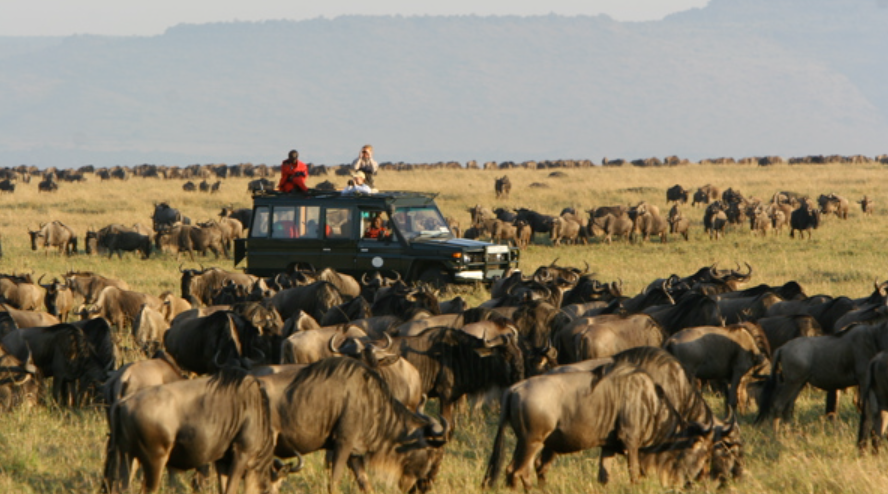
Best National Parks in Uganda: Where Your Safari Comes Alive
Uganda can turn a single morning into a wildlife story: lions on open savanna, elephants beside a river, chimpanzees calling from ancient forest, or mountain gorillas moving quietly through mist. If you are searching for the best national parks in Uganda, the real challenge is not finding a beautiful park. It is choosing the right park for the experience you actually want.
This guide breaks down Uganda’s strongest safari destinations by wildlife, scenery, activities, accessibility, and trip style. You will also get 2026 planning information on fees, travel times, itineraries, and costly mistakes.
The difference between a memorable safari and an exhausting one is often route design: the best parks for your interests are not always the parks that look closest on a map.
Quick Facts: Uganda Safari at a Glance
- Uganda has 10 national parks.
- Best overall wildlife variety: Queen Elizabeth National Park.
- Best classic savanna safari: Murchison Falls National Park.
- Best gorilla experience: Bwindi Impenetrable National Park.
- Best chimpanzee trekking: Kibale National Park.
- Best remote wilderness: Kidepo Valley National Park.
- Best short safari: Lake Mburo National Park.
- Best mountain adventure: Rwenzori Mountains National Park.
- Typical foreign non-resident park entry is US$40 per 24 hours in several Uganda safari parks; Murchison Falls is US$45 under the current published tariff.
- Standard gorilla trekking in 2026 is US$800 for foreign non-residents, with a US$600 low-season rate in April, May, and November.
1. Best National Parks in Uganda for Classic Wildlife Safaris
When travelers ask for the best national parks in Uganda, they often mean one thing: where can I see lions, elephants, buffalo, giraffes, hippos and other large mammals without spending the whole trip driving?
For that goal, Murchison Falls and Queen Elizabeth stand above the rest. They offer the classic safari combination of open habitats, game drives and water-based wildlife viewing, but they feel very different.
Murchison Falls National Park: Best for classic game drives
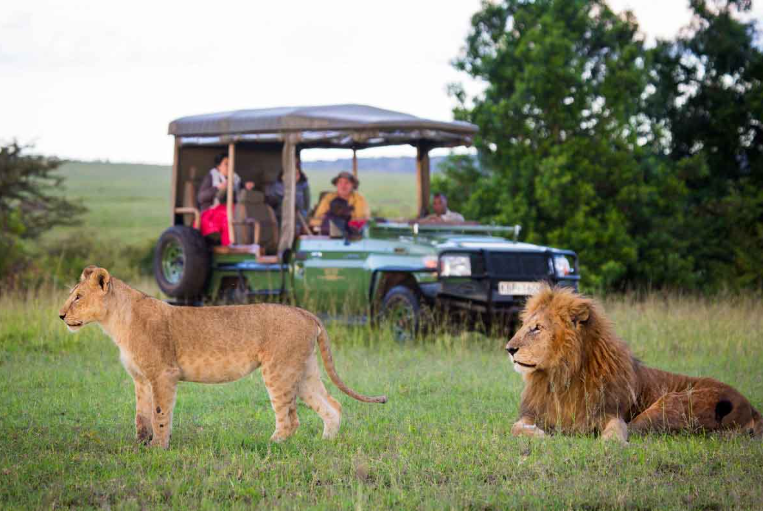
Murchison Falls is Uganda’s largest national park, covering about 3,840 square kilometres. The northern savanna is particularly productive for game drives, with elephants, buffalo, lions, Rothschild’s giraffes, Jackson’s hartebeest, waterbuck and other antelope.
That makes Murchison the stronger pick for big-game priorities on a shorter itinerary.
Queen Elizabeth National Park: Best for variety
Queen Elizabeth National Park is the more versatile choice. Its landscapes include savanna, wetlands, crater lakes, forests and the Kazinga Channel, creating a broad mix of wildlife habitats.
Game drives around the Kasenyi Plains can produce sightings of Uganda kob, lions, elephants, buffaloes and other plains species.
Travelers often compare the best national parks in Uganda by wildlife alone, but access matters too. For travelers comparing parks, Queen Elizabeth offers one of the best balances of wildlife and variety.
2. Best National Parks in Uganda for Primates and Gorillas
Uganda’s advantage is that a safari does not have to mean only savanna wildlife. Its forests create opportunities to see some of Africa’s most fascinating primates.
Bwindi Impenetrable National Park: Best for mountain gorillas
Bwindi is the obvious choice for travelers whose priority is gorilla trekking. The forest is home to roughly half of the world’s remaining mountain gorillas, and trekking takes place across four main sectors: Buhoma, Ruhija, Rushaga and Nkuringo.
A standard gorilla trekking permit for a foreign non-resident costs US$800 in 2026. During the newly introduced low-season period of April, May and November, the discounted rate is US$600. Those discounted permits are particularly attractive for flexible travelers, although the booking conditions are stricter and low-season permits cannot be rescheduled.
Kibale National Park: Best for chimpanzees
Kibale is the clear leader for chimpanzee trekking. The forest supports a remarkable concentration of primates, and the experience feels completely different from a savanna game drive.
Chimpanzee tracking costs US$250 for foreign non-residents under the 2026 tariff, with a lower US$200 rate during April, May and November. If you are already traveling through western Uganda, adding Kibale can transform a gorilla-focused itinerary into a much broader primate safari.
If you are already traveling through western Uganda, adding Kibale can transform a gorilla-focused itinerary into a much broader primate safari.
For first-time visitors, Uganda safari parks are easiest to understand by specialty.
3. Best National Parks in Uganda for Remote Wilderness
Some travelers want more than wildlife sightings. They want space, silence and the feeling that the modern world has disappeared.
Kidepo Valley National Park: Best for wilderness
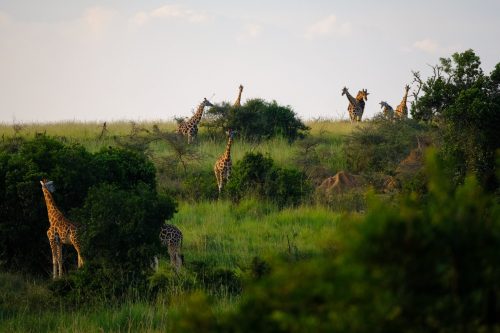
Kidepo is Uganda’s remote wilderness heavyweight. In the far northeast, it combines broad savannas, rugged mountains and a much quieter safari atmosphere than the country’s better-known parks.
The Narus Valley is the main wildlife area, where lions, elephants, buffaloes, zebras and several antelope species can be found. Kidepo is also important for species and landscapes that feel different from western Uganda, including greater kudu and ostrich.
Among the best national parks in Uganda, Kidepo is the choice for travelers who value remoteness over convenience. If your dream safari means fewer vehicles at sightings and dramatic wilderness scenery, the extra travel can be worth it.
Rwenzori Mountains National Park: Best for mountain landscapes
Rwenzori is not a conventional game-drive destination. It is a mountain adventure centered on high-altitude landscapes, unusual vegetation, waterfalls, lakes and the dramatic Rwenzori range.
Mount Stanley rises to 5,109 metres at Margherita Peak, Africa’s third-highest mountain. Multi-day hikes require fitness, preparation and proper equipment, but the reward is an environment unlike most Uganda safari parks.
4. Best National Parks in Uganda for Short Trips and Families
Not every traveler has ten days to spare. If you have only a few days, choosing a park near your route can make a bigger difference than choosing the park with the longest species list.
Lake Mburo National Park: Best for short safaris
Lake Mburo is the practical short-safari winner. It is much closer to Kampala and Entebbe than Uganda’s western and northern flagship parks, making it a useful first or final stop.
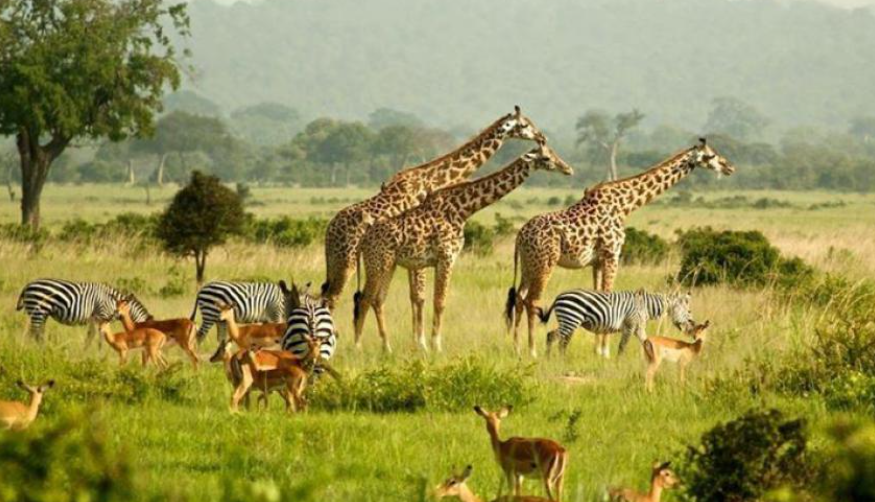
The park is known for zebra, impala, eland, buffalo, hippos and a strong range of birdlife.
For travelers comparing Uganda safari parks by total trip cost, Lake Mburo can be excellent value because lower transport time means more of your budget goes toward the actual safari rather than long road transfers.
Semuliki National Park: Best for unusual forest and hot springs
Semuliki sits on the edge of the Albertine Rift and has a different feel from the open savannas of Murchison and Queen Elizabeth. Its lowland forest supports forest elephants, primates and many bird species, while the Sempaya hot springs provide one of the park’s most recognizable attractions.
5. Uganda Safari Parks Compared: Which One Should You Choose?
| Park | Best for | Suggested stay | Main experience |
|---|---|---|---|
| Bwindi | Gorillas | 2–3 nights | Gorilla trekking, forest walks |
| Queen Elizabeth | Wildlife variety | 2–3 nights | Game drives, Kazinga cruise |
| Murchison Falls | Classic safari | 2–3 nights | Game drives, Nile cruise |
| Kibale | Chimpanzees | 2 nights | Chimp tracking, primates |
| Kidepo Valley | Wilderness | 3–4 nights | Remote game viewing |
| Lake Mburo | Short trips | 1–2 nights | Wildlife, walking, cycling |
| Rwenzori Mountains | Hiking | 4–8+ nights | Mountain trekking |
| Semuliki | Birding and forest | 1–2 nights | Birds, hot springs |
A 7-day itinerary could combine Kibale, Queen Elizabeth and Bwindi.
The best national parks in Uganda become easier to choose when time is limited.
The best national parks in Uganda differ in how they reward repeat drives. Murchison is strong for broad savanna and river scenery, Queen Elizabeth mixes habitats, Kibale specializes in forest primates, and Bwindi centers on gorilla trekking. That distinction matters when you have limited vacation time. A traveler with five days should not copy a fourteen-day route; the smartest itinerary protects time for the experience that motivated the trip in the first place. before you book. Give yourself enough time to stop, watch, photograph, and simply enjoy the landscape. That approach leaves more time for wildlife viewing, photography, meals, and the small moments that become trip highlights.
For most international visitors, the strongest route is not trying to visit every park.
6. 2026 Costs, Travel Times and Practical Planning Tips
For 2026 planning, the published UWA tariff lists foreign non-resident adult entry at US$45 per 24 hours for Murchison Falls and US$40 for Queen Elizabeth, Kidepo Valley, Kibale, Lake Mburo, Bwindi and Mgahinga. Activity fees such as gorilla trekking, chimpanzee tracking, boat cruises and specialist experiences are separate.
Rough travel times
- Entebbe to Murchison Falls: about 5–6 hours.
- Murchison Falls to Kibale: about 6–7 hours.
- Kibale to Queen Elizabeth: about 3–4 hours.
- Queen Elizabeth to Bwindi: about 5–6 hours.
- Entebbe to Lake Mburo: about 3–4 hours.
- Queen Elizabeth to Kidepo: a very long transfer and usually better handled with extra nights or a flight option.
When should you visit?
Uganda is a year-round destination, but wildlife viewing is often easiest during the drier periods, broadly June to September and December to February. Rain is still possible, and the forests can remain excellent for trekking during wetter months.
April, May and November are especially interesting for travelers who want to reduce gorilla or chimpanzee permit costs, provided they can accept wetter trail conditions and the specific restrictions attached to discounted permits.
7. Insider Tips for Choosing Uganda’s National Parks
If gorillas are your once-in-a-lifetime priority, put Bwindi first and build the rest of the trip around the permit date. If chimpanzees are your main interest, give Kibale enough time instead of treating it as a rushed overnight stop.
Compare Uganda safari parks by wildlife, access, activities and trip length.
For first-time visitors, Uganda safari parks are easiest to understand by specialty.
Tip: Book permits before lodges
Gorilla permits are date-specific. Your lodge and road itinerary should be built around the confirmed trekking date, not the other way around.
Tip: Keep at least two nights in major parks
One night often sounds efficient but usually is not. Arrival, check-in and travel can consume most of the day, leaving little time for wildlife.
Tip: Start game drives early
Animals are generally more active during the cooler morning hours. An early start also gives your guide more time to read tracks and respond to fresh sightings.
Tip: Use a private 4×4 for multi-park routes
A professional driver-guide adds value beyond driving. They understand park roads, animal behavior and where to position the vehicle.
Tip: Leave room for surprises
Do not schedule every hour. Plan carefully.
Frequently Asked Questions
What are the best national parks in Uganda for a first safari?
For a first safari, Queen Elizabeth and Murchison Falls are strong choices for classic wildlife, while Bwindi and Kibale add gorillas and chimpanzees. A seven- to ten-day combination gives more variety than staying in one park.
Which Uganda safari parks are best for the Big Five?
Murchison Falls, Queen Elizabeth and Kidepo are the main Uganda safari parks for classic big-game viewing, but Uganda requires a little nuance. Rhinos are not freely roaming in these national parks; they are tracked at Ziwa Rhino Sanctuary. A well-designed itinerary can therefore cover the Big Five across different protected areas.
Is Bwindi better than Queen Elizabeth National Park?
They are not direct substitutes. Bwindi is better for mountain gorillas and rainforest trekking, while Queen Elizabeth is better for savanna wildlife and boat cruises. Combining them is ideal when time allows.
How many days do you need for the best national parks in Uganda?
Seven days is enough for a focused western Uganda safari, while ten to fourteen days gives you much more breathing room. A good seven-day route could include Kibale, Queen Elizabeth and Bwindi. Longer trips can add Murchison Falls or Lake Mburo without making the itinerary excessively rushed.
What is the best time to visit the best national parks in Uganda?
For many travelers, June to September and December to February offer favorable conditions for wildlife viewing and road travel.
Uganda safari parks vary widely in landscape, wildlife and travel time. The forest parks remain rewarding outside these periods, and April, May and November can be attractive for travelers seeking discounted gorilla and chimpanzee permits.
Compare Uganda safari parks by wildlife, access, activities and trip length.
Conclusion: Choose the Park That Fits Your Safari
The best national parks in Uganda are the parks that match your time, interests and tolerance for transfers.
Choose Murchison Falls for classic wildlife and the Nile. Choose Queen Elizabeth for variety and the Kazinga Channel. Choose Bwindi for mountain gorillas, Kibale for chimpanzees, Kidepo for remote wilderness and Lake Mburo when you need a shorter, easier safari.
Most importantly, build the route around experiences rather than collecting park names. With good sequencing, Uganda can give you primates, big game, dramatic landscapes and genuine cultural encounters.
Bigodi Africa Expeditions can help you turn those choices into a practical itinerary with the right permits, lodges, guides and transfer times. Start planning today, choose your best national parks in Uganda, and get ready for the Pearl of Africa to surprise you.